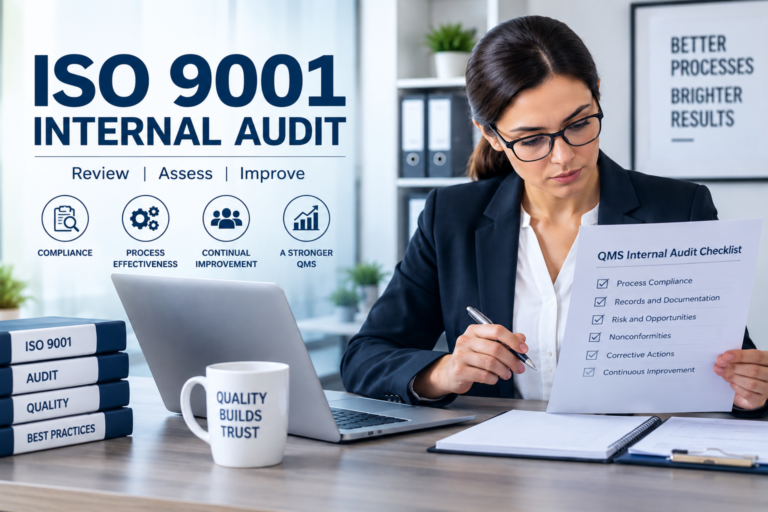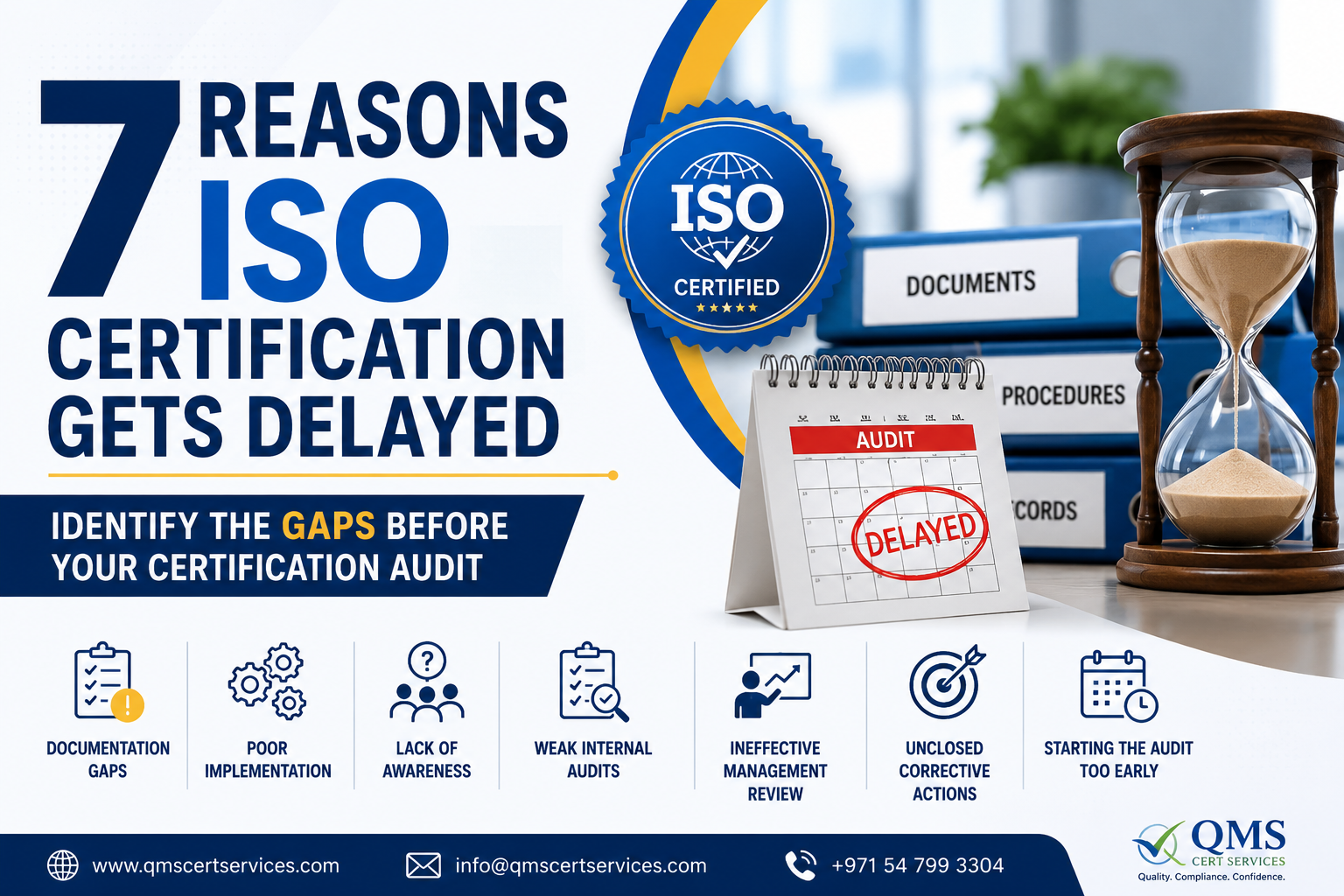
ISO certification is an important step for organizations that want to improve their processes, demonstrate compliance and build customer confidence.
However, many organizations experience unnecessary delays during the certification process. These delays normally happen because the management system is incomplete, poorly implemented or not properly checked before the certification audit.
Understanding the common causes of delay can help your organization prepare more effectively and complete the certification process with fewer problems.
1. Incomplete Management-System Documentation
One of the most common reasons for ISO certification delays is incomplete or outdated documentation.
Organizations may have policies and procedures, but important documents such as process maps, risk registers, objectives, work instructions and mandatory records may still be missing.
Common documentation gaps include:
✅ Missing procedures or records
✅ Documents without revision control
✅ Outdated policies
✅ Unapproved forms
✅ Documents that do not reflect actual company activities
The documentation should support the organization’s actual processes. Creating documents only for audit purposes can lead to serious findings during the certification audit.
2. Policies and Procedures Are Not Properly Implemented
Having documents alone does not make an organization ready for ISO certification.
The certification auditor will check whether employees are actually following the approved procedures and whether records are available as evidence.
For example, if a procedure requires supplier evaluations, the organization must be able to show completed supplier evaluation records.
Implementation gaps often occur when:
❌ Employees are not aware of the procedures
❌ Records are not maintained
❌ Departments follow different practices
❌ Responsibilities are not clearly assigned
❌ Procedures do not match actual operations
The system must be active and consistently followed before the certification audit.
3. Employees Are Not Aware of Their Responsibilities
ISO standards require employees to understand their responsibilities and how their work contributes to the management system.
During an audit, employees may be asked questions about:
📋 Company policies
📋 Department objectives
📋 Operational controls
📋 Risks related to their activities
📋 Reporting of problems or nonconformities
If employees cannot explain their responsibilities, the auditor may conclude that the system is not properly implemented.
Organizations should provide awareness training and ensure that employees understand the procedures relevant to their work.
4. Internal Audit Has Not Been Completed Properly
An internal audit is an important requirement before the certification audit.
The purpose of the internal audit is to check whether the management system meets the ISO standard and whether company procedures are being followed.
Certification delays can happen when:
⚠️ The internal audit is incomplete
⚠️ Important departments are not audited
⚠️ Audit findings are not properly recorded
⚠️ Corrective actions remain open
⚠️ The internal auditor is not competent or independent
A proper internal audit helps identify problems before they are found by the certification body.
5. Management Review Is Missing or Ineffective
Top management must review the performance and effectiveness of the management system.
The management review should include important topics such as:
✅ Internal audit results
✅ Customer feedback
✅ Process performance
✅ Achievement of objectives
✅ Risks and opportunities
✅ Nonconformities and corrective actions
✅ Resource requirements
✅ Opportunities for improvement
A meeting without proper inputs, decisions and records may not satisfy the requirements of the ISO standard.
Management review should result in clear decisions, responsibilities and actions.
6. Corrective Actions Are Not Properly Closed
Organizations often identify problems during internal audits, customer complaints or daily operations.
However, simply correcting the immediate problem is not enough.
A proper corrective action should include:
🔍 Description of the problem
🔍 Root-cause analysis
🔍 Action taken to eliminate the root cause
🔍 Responsible person
🔍 Target completion date
🔍 Verification of effectiveness
If corrective actions remain open or the same problem continues to occur, the certification auditor may raise a nonconformity.
7. The Organization Starts the Certification Audit Too Early
Some organizations schedule the certification audit before the management system has been fully implemented.
This can happen because of customer pressure, tender requirements or unrealistic deadlines.
Starting the audit too early can result in:
❌ Major or minor nonconformities
❌ Additional audit visits
❌ Extra certification costs
❌ Delays in receiving the certificate
❌ Increased pressure on employees and management
Before contacting a certification body, the organization should confirm that the documentation, implementation, internal audit, management review and corrective actions are complete.
How Can Your Organization Avoid ISO Certification Delays?
Organizations can reduce certification delays by completing a structured readiness review before the external audit.
A readiness review should check:
✅ Scope of the management system
✅ Mandatory documents and records
✅ Implementation across departments
✅ Employee awareness
✅ Risk and opportunity controls
✅ Internal audit completion
✅ Management review completion
✅ Corrective-action closure
✅ Overall certification readiness
Identifying these gaps early provides enough time to complete the required improvements before the certification audit.
Start with a Free ISO Readiness Assessment
QMS Cert Services provides a Free ISO Readiness Assessment to help organizations understand their current certification readiness.
The assessment helps identify:
🔍 Documentation gaps
🔍 Implementation weaknesses
🔍 Internal audit gaps
🔍 Management-review gaps
🔍 Priority actions required before certification
Completing the assessment can help your organization avoid unnecessary delays, audit findings and additional certification costs.
Start your Free ISO Readiness Assessment:
About QMS Cert Services
QMS Cert Services provides professional ISO and management-system consultancy services for organizations in the UAE and other locations.
Our services include:
✅ ISO gap analysis
✅ Management-system documentation
✅ ISO implementation support
✅ Internal audits
✅ Management-review support
✅ Corrective-action support
✅ Certification-audit preparation
For professional support, contact QMS Cert Services.
Email: info@qmscertservices.com
Phone: +971 54 799 3304
Location: Ajman, UAE
Website: https://qmscertservices.com/